
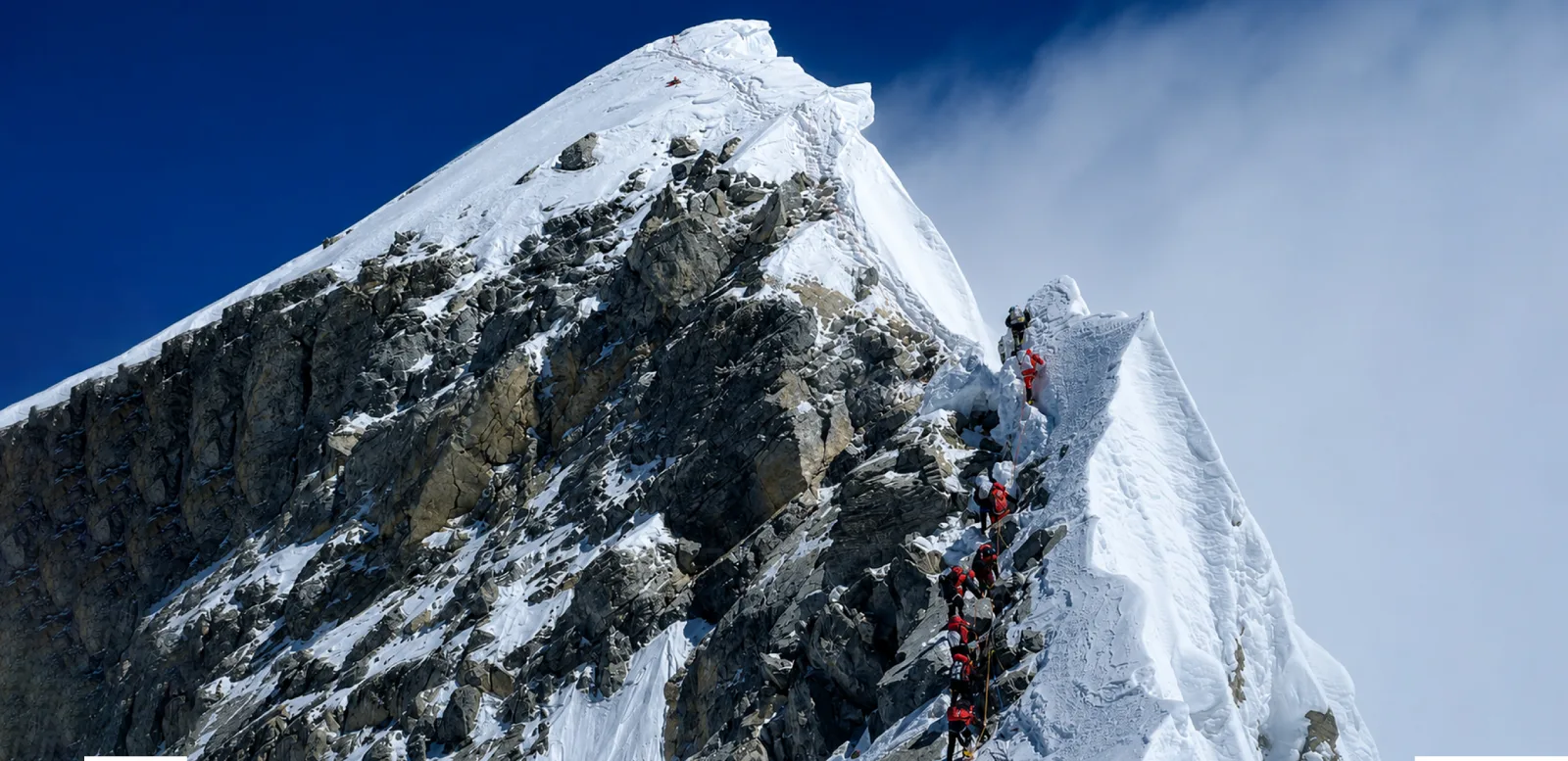
The Hillary Step (8,790 m) is an iconic and historically significant landmark on the southeast ridge of Mount Everest (8,848.86 m). This 12 m vertical rock face near the summit of Everest represents the human endurance and extreme risk possessed by Everest. The rockface is named after legendary mountaineer Sir Edmund Hillary, one of the first mountaineers to summit Everest with Tenzing Norgay Sherpa. This landmark represents the glorious achievement in mountaineering history when Hillary wedged his body to balance his way up to reach the top of the summit. The Hillary step is famous as the final barrier to the Everest summit.
In this blog, we provide information about Hillary Step on Mount Everest and the reason for it being a famous landmark. The landmark before and after the Nepal earthquake of 2015 and the risks the section carries during the Everest summit ascent are also provided.
What Is The Hillary Step?
|
Feature |
Description |
|
Location |
Southeast Ridge, between South Summit and true summit of Mount Everest |
|
Altitude |
8,790 meters (28,839 ft) |
|
Height |
12 meters (40 ft) |
|
Difficulty (Pre-2015) |
Grade IV/V technical climbing difficulty |
|
Current Condition |
Reported as collapsed or covered with snow after 2015 earthquake |
|
First Climbed |
1953, Sir Edmund Hillary and Tenzing Norgay |
|
Risk Level |
Extremely high due to high altitude and exposure |
The Hillary Step is a steep 12 meter vertical rock face that is located between the south summit and true summit of Mount Everest. This section is located at the extreme altitude of 8,790 m in the death zone, where oxygen is limited and mobility is highly challenging. The Hillary step is the final challenging section that tests the skill and endurance of every climber.
Hillary Step on Everest was a vertical rock section with a technical difficulty of grade IV/V before 2015. But the 2015 earthquake of Nepal shifted its position or made the section collapse under snow, due to which the climb is gradual and comparatively easy. The section still remains important navigation points that possess threats and challenges to the mountaineers.
Why Is the Hillary Step Of Mount Everest Famous?
The Hillary Step of Mount Everest was a well-recognized section for the technical obstacles it presented to the climbers from the southeast before 2015. This section requires technical skills, extreme endurance and willpower to proceed to the summit. The Hillary Step is also a navigational point that symbolizes climbers are just 60 meters away from the summit. Some of the key reasons that makes Hillary one fo the famous location of Mount everest includes:
-
Named after legendary mountaineer Sir Edmund Hillary, who navigated through the section to become one of the first people to ascend the summit.
-
One of the challenging and technically difficult section before 2015
-
Iconic location that is frequently featured in documentaries and expedition reports
-
Last obstacle to Everest summit until 2015
-
Section featuring a narrow passage causing a traffic jam.
Hillary Step Before and After: The 2015 Earthquake’s Impact
The Nepal earthquake in 2015 reshaped the geography of an iconic landmark, the Hillary Step in Everest. It is one of the debated changes in Everest's landmark, as before 2015, the section was a steep and vertical rock face that required rope-assisted climbing and technical skills to cross.
But after the 2015 earthquake, the section is reported to have collapsed or is believed to have been buried under the snow. As a result, the section is now a 45 to 60 degree ice or snow slope. Navigating the section is believed to be comparatively easier after 2015.
Many climbers and expedition operators believe that:
-
The 2015 earthquake has made the vertical rock section invisible
-
Rock section of the Hillary step is covered in snow
-
The climbing difficulty of the section is reduced in comparison to before 2015.
-
New risks of ice buildup, snow, and shifting of terrain have emerged after the 2015 earthquake.
While the Nepal earthquake in 2015 has changed the geography of Hillary step, the section still possesses various risks and challenges to the climbers.
Why the Hillary Step Is Still Dangerous Today
The technical difficulty of the Hillary step is believed to have been reduced after the 2015 earthquake. But it does not mean the section is not dangerous and risky in the present days. The section still remains one of the riskiest and most challenging sections in Everest. The exposure to the death zone, traffic jam situation, fatigue, and unstable snow in the section makes Hillary step equally challenging and risky.
1. Death Zone Exposure
Located at an extreme altitude of 8,790 m in the death zone, the oxygen level is insufficient. Due to lack of oxygen, a climber faces extreme exhaustion, confusion, degradation of stamina, and an increased chance of committing fatal errors.
2. Traffic Jams on the Summit Route
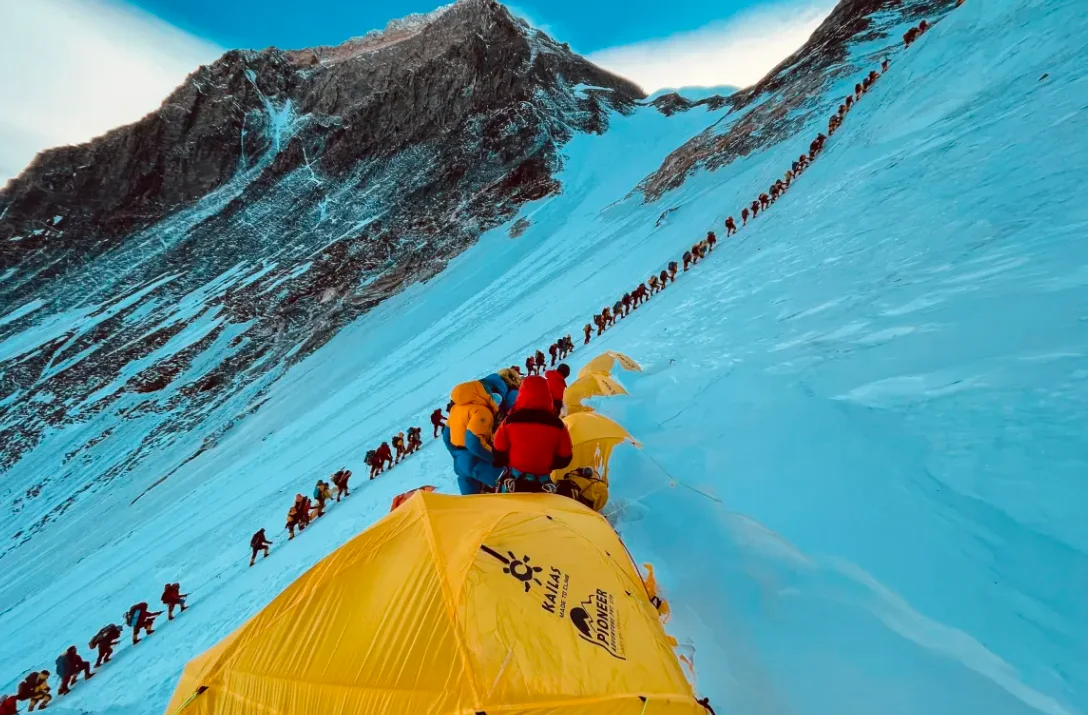
The narrow section of Hillary Step faces traffic jams and congestion due to increased numbers of climbers. As climbers must wait for an extended time period in the section, they are exposed to deadly weather and oxygen depletion.
3. Fatigue After a Long Ascent
As climbers reach the Hillary Step after passing through sections like Khumbu Icefall, Western Cwm, and Lhotse face, this section further tests the endurance and willpower of climbers. The 45 to 60 degree climb at the top presents challenges to the climbers who are already exhausted and tired. The long traffic and queues further worsen the situation.
4. Unstable Snow and Ice Conditions
The condition of the Hillary step after the earthquake is snowy and consists of ice. This condition increases the risk of an unstable surface that may collapse when stepping. The risk of slipping and sudden avalanches has also risen in the area.
The Hillary Step in Modern Everest Expeditions
In modern Everest expeditions, the Hillary Step is supported by fixed ropes installed by professional Sherpa guides to make the area more accessible. It is one of the key navigational points to Everest.
With the increase in climbers, the section experiences long queues and traffic jams, increasing the wait times in the area. The increase in the wait time in the section delays the Everest summit during the descent.
In the present situation, the section is not just a technical challenge but a combination of physical, logistical, and environmental risks.
Conclusion
The Hillary Step on Everest is one of the iconic and legendary sections that represents final challenges and marks a navigational point to the summit. The Nepal earthquake of 2015 has changed its structure, making it more accessible than before, yet the danger of the section remains. The risk of high altitude, snow, mini-avalanches, and long queues due to bottlenecks in the session exists, making the section risky in modern days.
If you are planning for an Everest Expedition and step over the Hillary Step to live the legendary moment, contact Mountain Delights Treks & Expeditions. Mountain Delights ensures proper planning, safety, experienced Sherpa guides, and customized itineraries to make your Everest Expedition safe and successful.






.webp)